How to Calculate the Cost of Holding Unsold Inventory
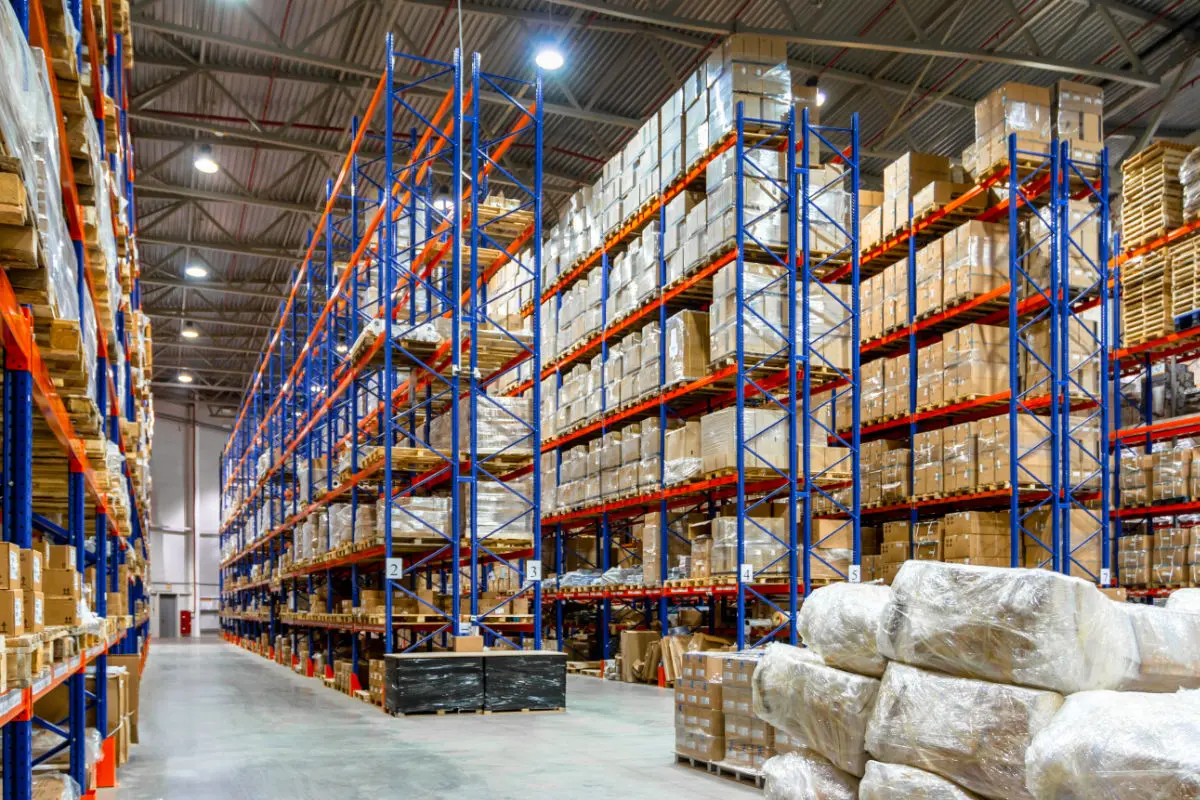
Every pallet of unsold stock costs you money while it sits still. Inventory holding cost is the running total of that spend, and most businesses know it exists without ever having put a number on it. This guide shows you how, with the formula, a worked example in pounds, and what the result should tell you about the stock you are holding.
What Is Inventory Holding Cost?
Inventory holding cost is the total cost of keeping unsold stock in storage over a period, usually a year. It covers storage and handling, the capital tied up in the stock, insurance, shrinkage, and the risk of the stock losing value before it sells.
You will also see it called inventory carrying cost. The two terms are interchangeable.
For a UK business, three pressures make the figure worth knowing:
- Capital. Money sitting in stock is not working anywhere else. With the Bank of England holding Bank Rate at 3.75% in September 2026, borrowing to cover that gap is not cheap.
- Space. Warehouse space keeps getting dearer. Average UK logistics rents rose 4.65% in the year to February 2026, according to Knight Frank, with further growth of around 2.4% forecast for 2026.
- Ageing stock. Seasonal lines, end-of-line products, and returns lose value the longer they sit. An estimated £25.1bn of non-food items were forecast to be returned in the UK in 2025, and not all of that can go back on sale as new.
What Is Included in Holding Cost
Holding cost has six main components:
- Storage. Rent, utilities, racking, and the labour needed to move stock in and out of your warehouse.
- Capital cost. Money tied up in stock that could be paying down borrowing, funding new lines, or earning interest.
- Insurance. Cover against fire, flood, theft, and damage, which rises with the value of stock you hold.
- Obsolescence and depreciation. The value stock loses as it goes out of season, is replaced by a newer model, or passes its best before date.
- Shrinkage. Stock lost to damage, theft, or counting errors.
- Taxes and fees. Business rates on the space you use and any per-pallet storage or handling fees charged by a third-party warehouse.
Inventory Holding Cost Formula
Inventory holding cost = average inventory value × holding cost rate
Average inventory value. Add your inventory value at the start of the period to your inventory value at the end, then divide by two. Use cost value, not selling price.
Holding cost rate. Work out what each of the six components above costs you over the year, express each one as a percentage of your average inventory value, and add them together.
If you do not have your own figures yet, industry benchmarks give you a starting point. NetSuite puts typical holding costs at 20% to 30% of total inventory value, and ShipBob estimates carrying costs at around 30% of total inventory costs. Treat these figures as a rule of thumb. Your own rate depends on where you store stock, what you pay to borrow, and how quickly your stock ages.
A Worked Example: Calculating the Real Cost of Holding Stock
The figures below are illustrative. They are not a quote, a valuation, or a benchmark for your sector. Imagine a UK homewares wholesaler that stores its stock in a rented unit.
Step 1: Work out average inventory value. Stock at cost was worth £180,000 at the start of the year and £140,000 at the end. (£180,000 + £140,000) ÷ 2 = £160,000 average inventory value.
Step 2: Build the holding cost rate.
| Component | Annual cost | % of average inventory value |
|---|---|---|
| Storage (rent, utilities, handling labour) | £12,800 | 8% |
| Capital cost | £11,200 | 7% |
| Insurance | £1,600 | 1% |
| Obsolescence and depreciation | £9,600 | 6% |
| Shrinkage | £3,200 | 2% |
| Taxes and fees (business rates share) | £4,800 | 3% |
| Total | £43,200 | 27% |
The capital cost assumes the business pays around 7% on the money tied up in stock. That is above Bank Rate, because most businesses borrow through overdrafts, loans, or invoice finance at a margin over it.
Step 3: Apply the formula. £160,000 × 27% = £43,200 a year to hold this stock.
Step 4: Convert it to a cost per unit. If the average stock holding is 16,000 units at an average cost of £10 each, the holding cost works out at £2.70 per unit per year, or around 23p per unit for every month it sits unsold.
At 27%, this business sits inside the 20% to 30% range. The per-unit figure is the more useful number, because it shows how much margin each slow-moving line is losing.
What a High Holding Cost Means for Your Stock
A holding cost figure matters when it changes a decision. The question is whether the stock will sell before the cost of holding it eats the margin you expected to make.
Take one end-of-line product in the example above: 2,000 units at £10 cost, which the business had planned to sell at £14. That line costs roughly £450 a month to hold. If it takes a year to clear through normal channels, that is £5,400 in holding cost against £8,000 of expected gross margin. That also assumes the selling price holds, which it rarely does for end-of-line or out-of-season stock.
Some stock is more exposed than the average:
- Seasonal lines lose most of their value once the season passes, and may need storing for a full year before they sell again.
- End-of-line products stop being replenished, so demand usually falls over time rather than recovering.
- Returned goods that cannot be resold as new often sit in a corner of the warehouse with no clear route to market.
Under UK accounting standards, stock is generally valued at the lower of cost and net realisable value. If a line can realistically only sell for less than it cost, your accounts may need to reflect that write-down anyway, and your accountant can confirm how this applies to you. Once the loss is on paper, paying to store that stock only adds to it.
Ways to Reduce or Avoid the Cost of Holding Unsold Inventory
The standard operational fixes are worth doing:
- Better demand forecasting. Ordering closer to real demand means less excess stock arriving in the first place.
- Tighter reorder points. Smaller, more frequent orders lower your average inventory value, which lowers holding cost directly.
- Discounting and bundling. Selling slow lines at a lower price through your normal channels, or pairing them with faster sellers, recovers some value and frees up space.
These help most with stock you have not bought yet. For stock that is already sitting in your warehouse and not moving, selling it outright is a separate option. You stop paying to hold it, and you turn it back into cash you can use.
Any bulk sale route, whether that is a marketplace like Faire, an eBay bulk listing, or a direct buyer, usually pays less than full retail. What you gain is speed and certainty. The right choice depends on how much the stock is costing you each month compared with the margin you would give up by selling it now.
If you have surplus, end-of-line, overstock, or returned stock you want to clear, Enviro Clear buys it directly. We hold the stock ourselves and take on the risk of reselling it, so you deal with one party and get one clear offer, with no chain of middlemen each taking a margin. There is no minimum quantity either, so we can buy a single pallet or clear a full warehouse.
Our buying process is straightforward. We typically come back with a valuation on the same day or within 24 hours, or two to three days for a large or complex inventory. Once you accept an offer, we can collect within 48 hours if you need the space back quickly.
Once you know what your stock is costing you to hold, the next step is knowing what it is worth. Contact us for a valuation and tell us what you have.